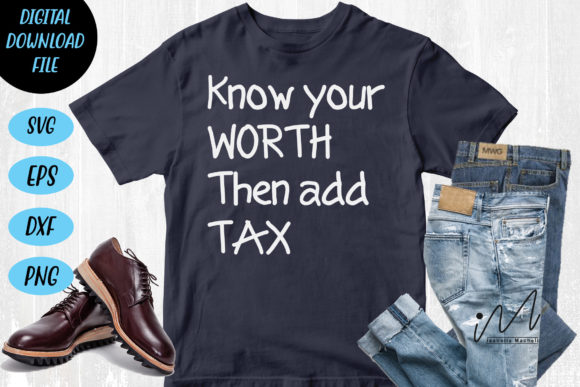
Know Your Worth Then Add Tax Vol 6
As someone who’s digitized, stitched, and sold hundreds of embroidery designs—across boutique apparel, baby keepsakes, Etsy bestsellers, and custom gift lines—I opened Know Your Worth Then Add Tax Vol 6 expecting charm with clarity. What I found was a tight, confident typographic statement that lands just right: bold enough for visibility, clean enough for versatility, and thoughtful enough to feel intentional—not just trendy.
This isn’t a floral monogram or a cutesy cartoon. It’s a modern, girl-power phrase rendered in strong, balanced lettering—no frills, no excessive swirls, no decorative drop shadows or distracting embellishments. The layout flows left-to-right with generous spacing between words, making it inherently readable at medium to large hoop sizes. That matters. A lot. Because when you’re stitching this onto a tote bag for a local women-owned bookstore or embroidering it on the chest of a soft cotton sweatshirt for a small-batch launch, legibility isn’t optional—it’s foundational.
I tested Know Your Worth Then Add Tax Vol 6 across three real-world scenarios: a heavyweight canvas tote (for a craft fair booth), a midweight unisex crewneck (intended for a small shop’s spring collection), and a lightweight organic cotton tea towel (as a handmade holiday gift). In each case, the design held up—not because it’s “foolproof,” but because its simplicity works *with* embroidery, not against it.
On the tote? Crisp, grounded, and instantly recognizable from three feet away. The letterforms have enough weight to avoid looking thin or washed out on textured fabric, and the consistent stroke width meant my satin stitch edges stayed smooth without puckering—even with a standard cutaway stabilizer. On the sweatshirt? Slightly more care was needed: I reduced density by about 10% and added a light tear-away topping to prevent thread snagging on the knit’s surface. Still, the result felt professional—not DIY-ish—and reinforced the wearer’s quiet confidence rather than shouting.
The tea towel test was telling. Here, where thread sheen and fabric drape affect perception more than anywhere else, Know Your Worth Then Add Tax Vol 6 didn’t fight the material. Its open spacing allowed the stitches to breathe, and the lack of tiny serifs or ligatures meant no lost detail in the final stitch-out. No ghosting. No bleeding. Just clean, proud typography that looked like it belonged—not like it was pasted on.
That said, this design isn’t magic on every surface. I’d hesitate to use it under 3 inches wide on stretchy fabric like jersey or ribbed knits—especially on curved areas like cap fronts or sleeve cuffs. Tiny lettering here risks blurring or distortion during hooping and stitching. Likewise, on very dark fabrics (navy, charcoal, black), double-check your thread contrast: a light gray or cream thread might read as “soft,” but could easily vanish unless you’re using high-sheen polyester or metallics intentionally. And while the SVG/DXF/EPS files let you scale freely, remember: scaling down too far compresses negative space, which can cause fill stitches to overheat or running stitches to cluster unnaturally.
Where Know Your Worth Then Add Tax Vol 6 truly shines is in context-driven storytelling. It fits naturally on products where the message reinforces the item’s purpose: embroidered patches for mentorship programs, pillow covers for teen bedrooms, aprons for female-led bakeries, nursery wall hangings that double as affirmations, or even subtle chest embroidery on bridesmaid robes. It doesn’t scream “gift”—it whispers “I see you.” That subtlety builds trust. Customers don’t buy slogans; they buy resonance. And this design delivers that without leaning on cliché.
For Etsy sellers and craft business owners, this is a low-risk, high-return digital embroidery file. It pairs well with neutral palettes and minimal branding—so it won’t clash with your shop’s aesthetic, whether you lean boho, modern-minimal, or vintage-inspired. As a design asset, it scales cleanly into printable mockups (try it on a flat-lay of folded towels or stacked mugs), supports cohesive product bundles (“Self-Worth Set” with matching quote patches and iron-ons), and translates smoothly into commercial embroidery workflows—provided you’ve confirmed licensing terms before listing finished items.
A few practical notes from the stitching bench:
- Always test on scrap fabric first—especially if pairing with textured weaves, terry cloth, or blends.
- Review stitch density before stitching on lightweight or delicate fabrics (like baby onesies or linen napkins).
- Confirm hoop size compatibility: this design reads best at 4–6 inches wide, depending on garment placement and fabric drape.
- Inspect corners and terminals: no sharp angles or micro-details here—but still verify how the last letter “e” anchors on your machine’s output.
- Try black-and-white mockups before committing to thread colors—this helps gauge contrast and visual weight on both light and dark backgrounds.
- Use appropriate stabilizer: cutaway for knits, tear-away for stable wovens, and fusible + topping for nap-heavy fabrics like towels.
- Check commercial use rights before selling physical products or bundling the file with other design assets—this is a Graphics category download, so clarify permissions early.
What makes Know Your Worth Then Add Tax Vol 6 stand out in a crowded Crafts marketplace isn’t novelty—it’s restraint. It doesn’t try to be everything. It knows its lane: confident, concise, and quietly empowering. That makes it easy to style, reliable to stitch, and meaningful to receive. Whether you’re building a line of embroidered kitchen goods, launching personalized gifts for graduation season, or adding a signature touch to your small shop’s merch, this design earns its place—not as filler, but as finish.
It’s the kind of embroidery file that doesn’t need explanation once it’s stitched. Just recognition. A pause. A nod. That’s the mark of good design—and why Know Your Worth Then Add Tax Vol 6 feels less like a graphic and more like a quiet collaboration between maker and message.